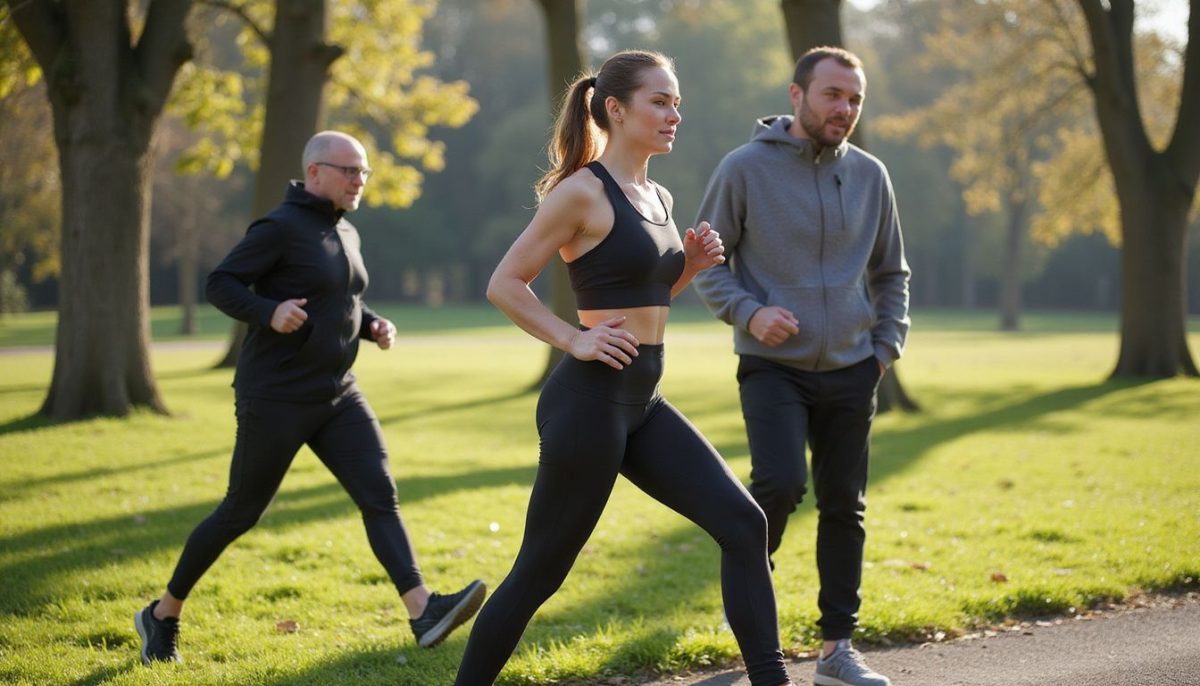
Initiating a fitness regimen might feel challenging, but it’s crucial for combating health complications. This article provides guidance to construct a fitness routine that suits your needs.
Continue with us for straightforward guidelines!
Consistent workouts ward off health complications. Building your personalized effective routine is less complicated than you presume. Initiate by determining specific fitness objectives.
Ascertain whether strength workouts, aerobic exercises, or a blend of both align with your targets.
For muscle amplification and power, concentrate on weightlifting and resistance workouts. Integrate routines such as bench presses, squats, and deadlifts into your fitness regimen.
These compound exercises engage numerous muscles concurrently.
If enhancing endurance and cardiovascular health is your objective, incorporate more aerobic exercises into your routine. Physical practices such as running, swimming, or high-intensity interval training (HIIT) are excellent options.
Harmony is crucial in any fitness regimen. Integrate diverse exercise forms to witness better outcomes more swiftly. Also, moderate your intensity with progressive overload to prevent injuries and accelerate muscle amplification.
Allocate time for rest days too. Your physique necessitates time to recuperate post-workouts through rest and restoration methods like foam rolling or dynamic stretches.
Maintain focus on nutrition—consuming a nutritious diet complements gym endeavours significantly! Prioritize lean proteins from eggs or lean meats and include abundant quantities of fruits, vegetables, whole grains, dairy products, and supplement with protein shakes when required.
Finally, monitor your improvement with resources like fitness trackers. They assist in observing advancements, making the attaining of those initial fitness objectives much uncomplicated.
Key Takeaways
- Start with goals and mix exercises like cardio, strength training, and flexibility for health.
- Warm up before and cool down after workouts to avoid injuries. Use proper form.
- Regular exercise helps prevent diseases, boosts mood, and improves mental well-being.
- Track progress with fitness trackers or measures like pushup counts and mile times.
- Eating right supports your workout plan. Include lean proteins, fruits, vegetables, and whole grains.
Types of Exercise
 Cardiovascular Workouts, Strength Training, and Flexibility and Stretching Exercises constitute the basis of a comprehensive fitness regimen. Integrating these varied types of exercise into your workout routine can result in enhanced overall health and well-being.
Cardiovascular Workouts
Cardio exercises like running, biking, or swimming are essential. The CDC recommends 150 minutes of moderate-intensity physical activity weekly to help control weight and reduce heart disease risk.
Heart disease was responsible for 32% of global deaths in 2012.
For a fun workout, try jumping rope, dancing, playing soccer, power walking, or boxing. Hiking offers both physical and mental benefits by increasing endorphins that boost mood.
Strength Training
Strength training helps keep the body healthy by reducing fat and increasing lean muscle. It’s suitable for people at any fitness level. You can use body weight, resistance bands, dumbbells, or gym machines.
Lifting weights benefits more than just muscle size. It strengthens bones and aids in weight management. Strength training can also reduce symptoms of chronic diseases like arthritis and diabetes.
Before starting a new exercise routine, especially if you have health issues or haven’t been active recently, consult with a doctor.
Flexibility and Stretching Exercises
Flexibility exercises make your muscles stretch and help your joints move more freely. It’s good to warm up your muscles before you start stretching. After doing cardio or lifting weights, it’s the best time to stretch.
You should hold each stretch for 10 to 30 seconds and do it three to five times. This kind of exercise makes sure your body can move well without getting hurt.
Doing stretches slowly is important so you don’t hurt yourself. These activities improve how much you can move and make your muscles ready for more action. They include moves that target different parts of your body, like the legs in back squats or the arms in dumbbell curls.
By adding these exercises to your routine, you’ll be able to bend, twist, and reach better over time.
Creating a Personalized Fitness Plan
To craft a personalized fitness plan, begin by evaluating your current fitness level. Subsequently, establish clear and attainable objectives to strive for. Customize your plan according to your body’s requirements and your particular fitness ambitions.
Assess Your Current Fitness Level
To assess your current fitness level, you can measure your pulse rate before and after walking 1 mile. Time yourself to walk 1 mile or run 1.5 miles. Count how many standard or modified pushups you can do in a row.
Measure your waist circumference at the bellybutton and calculate your body mass index (BMI). Also, assess flexibility in hips, knees, ankles, shoulders, and elbows.
Assessing your fitness level involves tracking various measurements like pulse rate, pushup count, and BMI calculation to understand where you stand physically.
Set Clear and Achievable Goals
Before delving into an exercise program, it’s crucial to set clear and achievable goals. SMART goals – Specific, Measurable, Achievable, Relevant, Time-bound – are the cornerstone of goal setting for fitness.
Take time to assess your current fitness level and then establish what you want to achieve. Whether it’s increasing strength or improving endurance, having specific targets will keep you focused and motivated.
For instance, aim for 150 minutes of moderate or 75 minutes of vigorous aerobic activity each week as recommended by health experts. As a starter also keep in mind that regular updates should be made every 4 to 6 weeks to track progress and make necessary adjustments in your workout plan.
Health Benefits of Regular Exercise
Regular exercise offers a range of health benefits. It enhances physical health by boosting stamina, improving muscle strength, and promoting better heart health. Furthermore, it positively influences mental well-being by reducing stress and enhancing mood.
Improved Physical Health
Exercising regularly promotes serious diseases like heart disease, diabetes, and certain cancers. Around 51% of adult Canadians face health risks due to not engaging in physical activity.
Individuals with higher fitness levels have a reduced risk of premature death by 20% to 35%. Participating in at least 150 minutes of moderate physical activity per week significantly lowers the risk of type 2 diabetes.
Routine physical activity decreases the relative risk of colon cancer by 30%-40%. Weight-bearing exercises enhance bone strength, reducing fall and fracture risks.
These facts underscore how regular exercise can significantly enhance your overall physical well-being, helping you prevent many common health issues and live a longer, healthier life.
Enhanced Mental Well-being
Regular exercise can significantly enhance mental health and emotional well-being. It diminishes the rates of mental illness and has a positive impact on mood, concentration, and alertness.
Any level of physical activity, regardless of intensity, delivers mental health benefits. Exercise modifies brain chemicals for the better, enhances sleep quality, and boosts self-esteem.
Social interactions during exercise provide support and distractions from negative thoughts. Outdoor exercise can elevate vitality, pleasure, self-esteem while reducing tension and fatigue.
In summary, integrating regular physical activity into your routine not only enhances your physical health but also has substantial benefits for your mental well-being. It’s a straightforward yet potent way to boost overall happiness and wellness.
Injury Prevention Tips
When starting your workout, ensure to warm up thoroughly to prepare your body for exercise. Cooling down after exercising is equally important in aiding muscle recovery and reducing the risk of injury.
Warm-Up and Cool-Down Practices
Warm-Up and Cool-Down Practices are essential parts of any fitness routine. Factualy, Warm-Up Intervention Programs (WIPs) can reduce sports injuries by 36%. For effectiveness, a comprehensive warm-up should last 10 to 20 minutes and include strength, balance, aerobics, and stretching exercises.
Adhering to WIPs was approximately 80%, showing higher adherence linked to greater injury reduction.
Regarding Cool-Down Practices after exercising, they aid in reducing heart rate gradually and preventing dizziness. A proper cool-down assists in preventing muscle soreness and stiffness.
It is noteworthy that both the warm-up and cool-down play vital roles in maintaining your body’s safety during exercise routines.
Proper Form and Technique
Maintaining proper form during exercise is crucial to prevent injuries. Pay close attention to your body positioning and movements with each repetition. Using correct technique reduces the risk of strains, sprains, and other workout-related injuries.
To make sure you’re using the right form, begin with a warm-up routine that includes dynamic stretches to prepare your muscles and joints. Throughout your workouts, focus on maintaining good posture and aligning your body correctly.
If you experience discomfort or pain while performing an exercise, stop and readjust immediately. Keep in mind to cool down after workouts through static stretching to help maintain flexibility and promote recovery.
Conclusion
In summary, constructing an effective fitness and exercise program involves evaluating your current fitness level, setting attainable goals, integrating various types of exercise, and allowing for recovery time.
Regular physical activity provides numerous health benefits, including lowering the risk of chronic diseases, improving balance and coordination, aiding in weight management, enhancing sleep quality, and boosting self-confidence.
Commencing a fitness program should include assessing your fitness level, devising a well-rounded routine with gradual progression, starting slowly while also being adaptable with the routine to fit your needs.
Monitoring progress is essential to monitor advancements.
Keep in mind to acquire suitable equipment like athletic shoes and exercise tools before starting. A comprehensive collection of workout routines is available online as well. Different workout styles can be effective for muscle building and fat loss if done consistently with proper form.
Ultimately, participating in enjoyable activities that align with your goals will help you stay motivated on your fitness journey.
References
- https://www.healthline.com/health/fitness-exercise/cardio-exercises-list
- https://www.mayoclinic.org/healthy-lifestyle/fitness/in-depth/strength-training/art-20046670
- https://www.health.harvard.edu/exercise-and-fitness/the-4-most-important-types-of-exercise
- https://www.heart.org/en/healthy-living/fitness/fitness-basics/flexibility-exercise-stretching (2024-01-22)
- https://www.opexfit.com/blog/how-to-create-a-personalized-workout-plan
- https://www.vitarx.co/resources/fitness-energy/creating-a-personalized-workout-plan (2025-01-20)
- https://www.piedmont.org/living-real-change/how-to-create-a-workout-plan-for-your-fitness-goals
- https://pmc.ncbi.nlm.nih.gov/articles/PMC1402378/
- https://www.betterhealth.vic.gov.au/health/healthyliving/exercise-and-mental-health
- https://pmc.ncbi.nlm.nih.gov/articles/PMC1470658/
- https://pmc.ncbi.nlm.nih.gov/articles/PMC9140806/
- https://pmc.ncbi.nlm.nih.gov/articles/PMC3588693/
- https://www.onepeloton.com/en-AU/blog/injury-prevention/ (2023-11-15)
- https://pmc.ncbi.nlm.nih.gov/articles/PMC9565175/